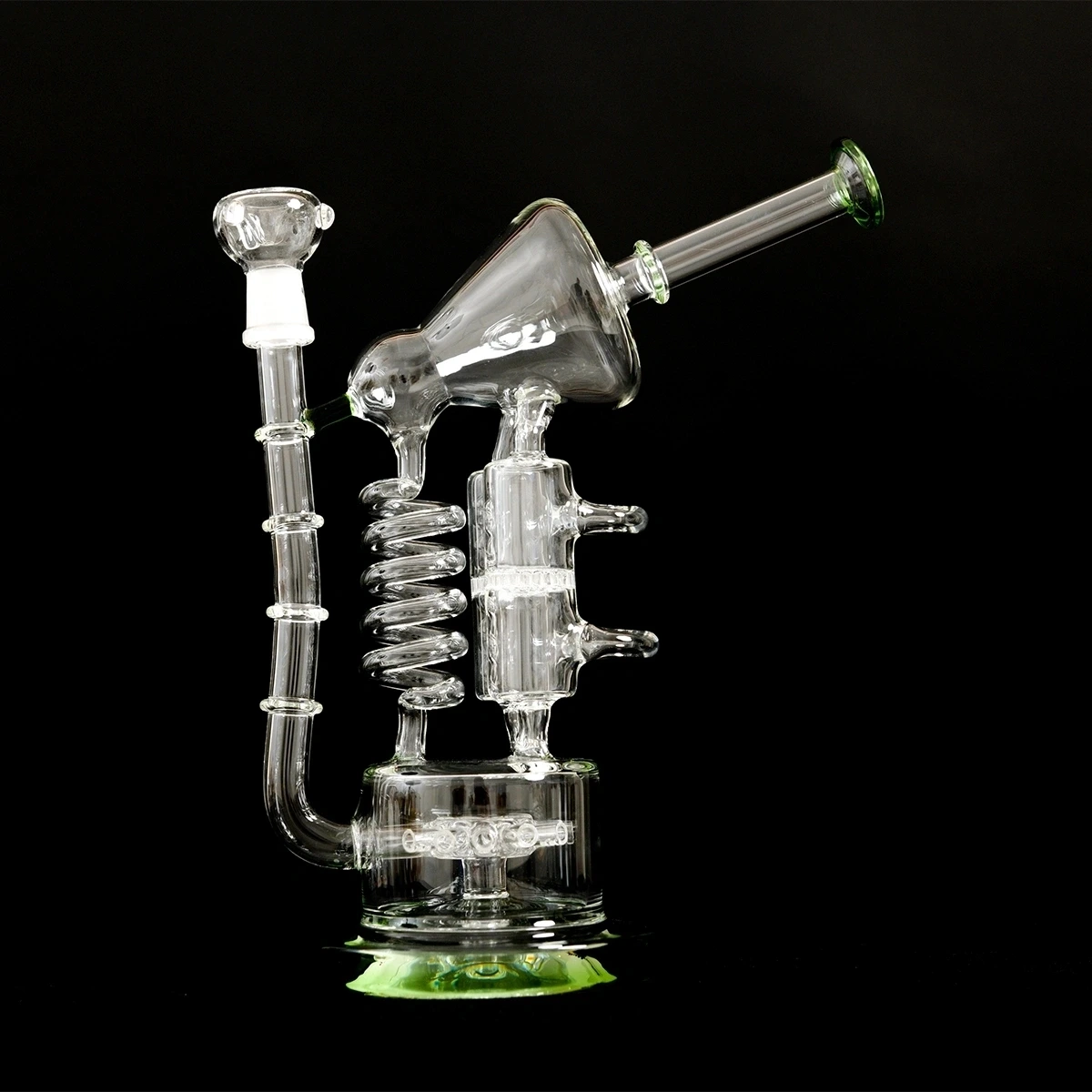
Bongs, also known as water pipes, can be made from various materials, each offering unique characteristics and advantages. Here are some of the different materials commonly used to make bongs:
1. Glass: Glass bongs are the most popular choice among smoking enthusiasts. They are favored for their transparency, allowing users to see the water level and smoke inside the bong. Glass provides a smooth and clean taste, does not affect the flavor of the smoke, and is easy to clean. Additionally, glass bongs can be blown into various artistic shapes and designs.
2. Acrylic: Acrylic bongs are made from plastic and are more affordable than glass bongs. They are lightweight, durable, and less likely to break if dropped. However, they may not provide the same level of flavor purity as glass bongs, and over time, they can get scratched or become discolored due to frequent use and cleaning.
3. Silicone: Silicone bongs have gained popularity in recent years due to their flexibility, durability, and ease of storage. They are virtually indestructible and can be folded or collapsed for easy transport. Silicone bongs are also dishwasher safe, making them effortless to clean. However, some users may find that silicone affects the taste of the smoke slightly.
4. Ceramic: Ceramic bongs are less common but can be aesthetically pleasing and artistically designed. They are generally heavier than glass bongs and can retain heat well. Ceramic bongs may provide a unique smoking experience, but they can be fragile, and care must be taken to avoid chipping or breaking.
5. Bamboo: Bamboo bongs are crafted from bamboo stalks and can offer a natural and rustic appeal. They are lightweight, eco-friendly, and can provide a clean taste. However, they may require more maintenance and care to prevent cracking or splitting over time.
6. Metal: Metal bongs are typically made from stainless steel or aluminum. They are durable, easy to clean, and less likely to break. However, some users find that metal bongs can impart a metallic taste to the smoke, which may not be as enjoyable as other materials.
7. Ceramic-Glass Hybrid: Some bongs feature a combination of glass and ceramic elements, providing the best of both materials. These hybrid bongs may have a glass base and mouthpiece with a ceramic or porcelain body, offering an appealing mix of aesthetics and functionality.
Each material has its advantages and drawbacks, so choosing the right bong material depends on your preferences, budget, and lifestyle. Glass remains a popular choice for its purity of taste and versatility, but other materials like silicone and acrylic offer more affordability and durability for those seeking practicality and portability.