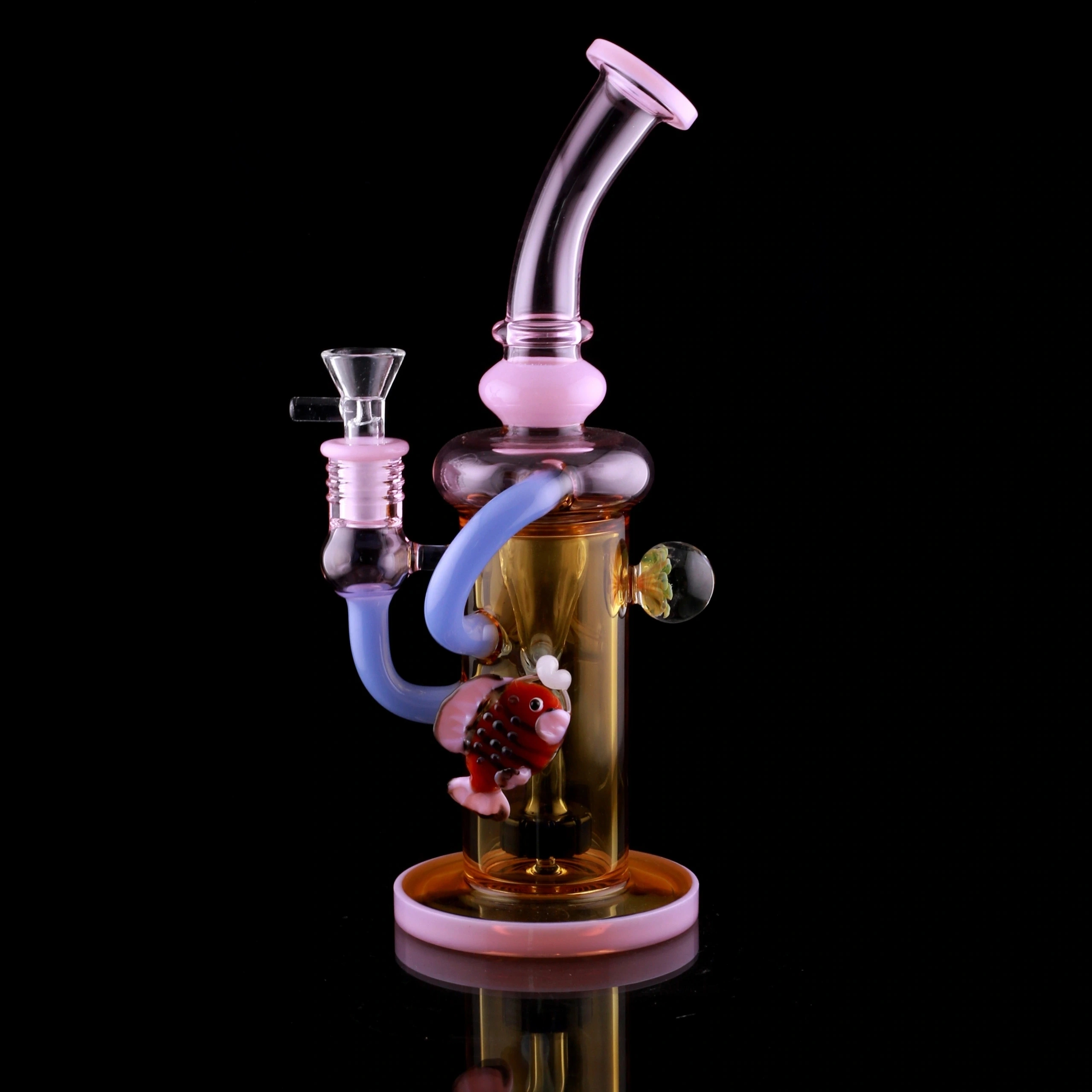
A bong and a dab rig are both types of smoking devices used to consume cannabis, but they differ in their design and the type of cannabis product they are intended for.
A bong, also known as a water pipe, is a device used for smoking dry herbs, such as marijuana flowers. It typically consists of a vertical tube or chamber, a bowl to hold the herbs, a downstem that submerges into the water, and a mouthpiece. When smoking with a bong, the smoke from the burning herbs passes through the water, which helps cool and filter the smoke before it is inhaled, resulting in a smoother experience.
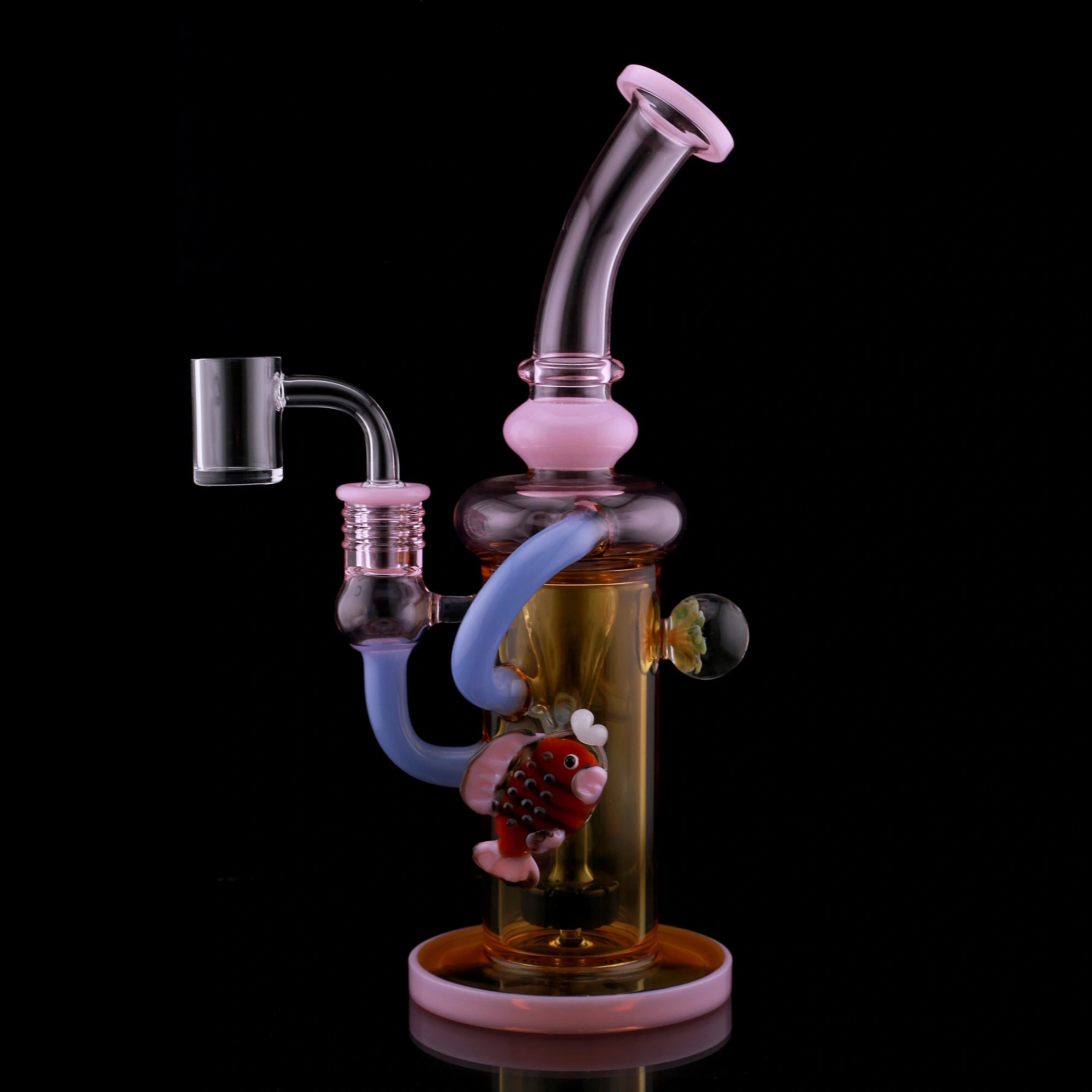
On the other hand, a dab rig, also referred to as an oil rig, is specifically designed for vaporizing cannabis concentrates, commonly known as dabs. Dabs are highly potent extracts that come in various forms, such as shatter, wax, or oil. A dab rig looks similar to a bong, with a vertical tube or chamber, a mouthpiece, and sometimes a water filtration system. However, instead of a bowl, it features a heated nail or banger where the dab is placed.
The process of using a dab rig involves heating the nail or banger with a torch until it reaches the desired temperature. Once heated, the dab is applied to the hot surface, causing it to vaporize instantly. The vapor travels through the rig and is inhaled through the mouthpiece. Dab rigs are designed to withstand higher temperatures than traditional bongs to effectively vaporize the concentrated cannabis extracts.
In summary, while both bongs and dab rigs are used for consuming cannabis, a bong is used for smoking dry herbs, while a dab rig is specifically designed for vaporizing cannabis concentrates, or dabs.