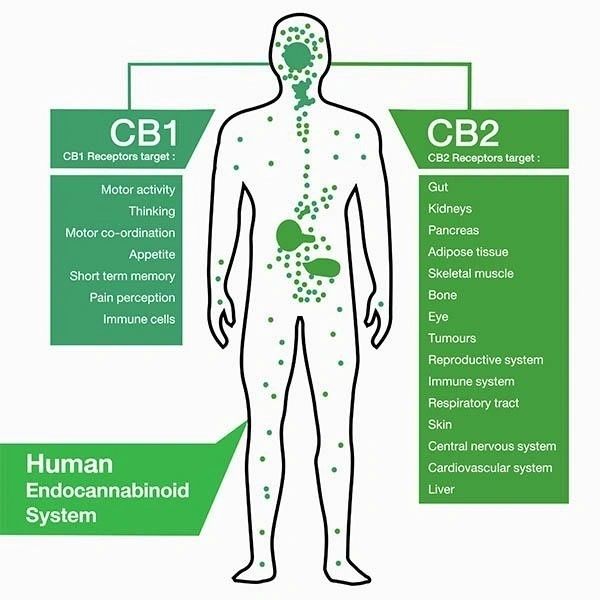
The endocannabinoid system (ECS) is a complex network of receptors, endocannabinoids (cannabinoids produced within the body), and enzymes that play a crucial role in regulating various physiological processes and maintaining homeostasis (balance) in the body. The ECS is found in mammals, including humans, and is involved in a wide range of functions, such as mood, memory, pain sensation, appetite, sleep, immune response, and more.
Here's how the endocannabinoid system works:
1. Receptors: The ECS consists of two primary types of receptors: CB1 receptors, mainly found in the brain and central nervous system, and CB2 receptors, predominantly located in the peripheral tissues, immune cells, and organs.
2. Endocannabinoids: Endocannabinoids are endogenous cannabinoids produced by the body. The two most well-known endocannabinoids are anandamide and 2-arachidonoylglycerol (2-AG). These endocannabinoids are produced on-demand in response to various stimuli and act as chemical messengers, binding to CB1 and CB2 receptors to transmit signals.
3. Enzymes: Enzymes are responsible for the synthesis and breakdown of endocannabinoids. The main enzymes involved in the ECS are fatty acid amide hydrolase (FAAH), responsible for breaking down anandamide, and monoacylglycerol lipase (MAGL), which breaks down 2-AG.
4. Signaling and Regulation: When there is an imbalance or disruption in the body, endocannabinoids are produced and released to bind with CB1 and CB2 receptors. This binding triggers a series of signaling events that help regulate various physiological processes. For example, in response to pain or inflammation, endocannabinoids may be released to reduce the sensation of pain and inflammation.
5. Phytocannabinoids: Phytocannabinoids are cannabinoids produced by plants, and they can also interact with the ECS. The most well-known phytocannabinoid is delta-9-tetrahydrocannabinol (THC) found in cannabis, which binds to CB1 receptors and is responsible for the psychoactive effects of marijuana. Another essential phytocannabinoid is cannabidiol (CBD), which does not produce psychoactive effects but has various potential therapeutic properties.
Overall, the endocannabinoid system works as a regulatory system that helps the body maintain balance and respond to internal and external changes. It plays a vital role in overall health and wellness, and its dysfunction has been implicated in various health conditions, making it an important area of research and potential therapeutic development.